À mesure que les systèmes de projection gagnent en taille et en complexité, les considérations de planification vont de plus en plus au-delà des appareils et des spécifications individuels. Cet article examine les systèmes de projection à grande échelle d'un point de vue théorique et pratique. perspective de planification du système, L'objectif est de déterminer comment l'échelle modifie la coordination, la stabilité et le comportement à long terme.
Pourquoi les hypothèses de planification commencent à échouer à grande échelle
Dans les systèmes plus petits, les décisions de planification sont souvent centrées sur les appareils :
- Chaque projecteur est aligné individuellement
- Les ajustements de géométrie sont gérés localement
- Le mélange est traité comme une étape de correction visuelle
Au fur et à mesure que l'échelle augmente, ces hypothèses deviennent fragiles. Les tolérances physiques mineures s'accumulent. Les corrections géométriques appliquées indépendamment commencent à diverger. Les zones de mélange deviennent sensibles à la dérive de la luminosité et à la variance de l'étalonnage. Ce qui apparaissait auparavant comme des ajustements isolés interagit désormais sur l'ensemble de la toile.
À cette échelle, de nombreux défis ne sont plus causés par des composants individuels, mais par la manière dont les responsabilités sont réparties dans le système.
La coordination devient la principale contrainte de conception
Les grands systèmes de projection introduisent une nouvelle contrainte dominante : coordination.
La coordination n'est pas seulement spatiale, mais aussi temporelle et comportementale :
- La géométrie doit rester cohérente pour toutes les sorties de projection.
- Le mélange des bords doit répondre de manière uniforme aux changements de luminance.
- Le comportement temporel doit rester stable dans des conditions de fonctionnement variables.
Ces exigences sont difficiles à valider lors de l'installation initiale, mais elles déterminent si le système restera visuellement cohérent au fil du temps. C'est pourquoi la planification des grandes projections se concentre de plus en plus sur comment le système se comporte dans son ensemble, plutôt que les performances de chaque projecteur pris isolément.
Ce passage de la planification au niveau du dispositif à la coordination au niveau du système n'est pas théorique.
Une installation d'art numérique à grande échelle illustre clairement cette transition.
Au fur et à mesure que l'échelle du système augmentait et que le fonctionnement à long terme devenait une exigence, la cohérence visuelle dépendait moins des projecteurs individuels que de la façon dont la géométrie, le mélange et la synchronisation étaient coordonnés dans l'ensemble du système.
Une discussion technique sur cet environnement et ses implications architecturales est disponible ici :
→ Pourquoi le traitement vidéo basé sur un FPGA reste essentiel dans les environnements d'art numérique à grande échelle ?
Des problèmes de coordination similaires se posent également dans les expositions publiques à plus petite échelle.
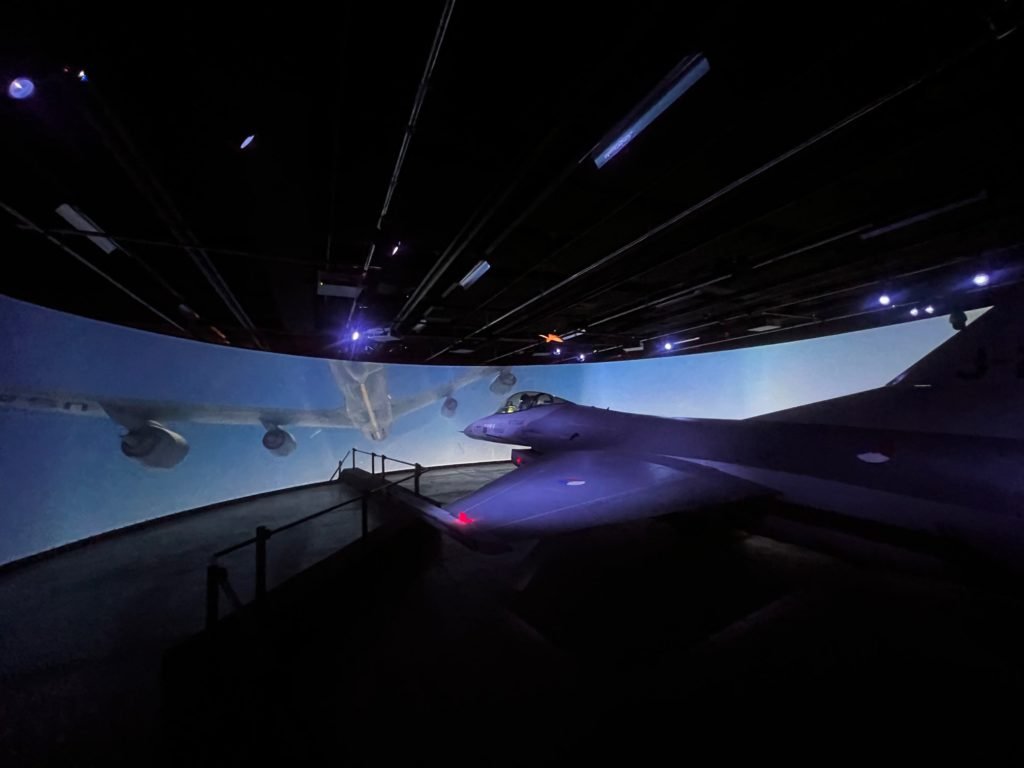
Dans le cadre de la Exposition médiatique Le Space, Le fonctionnement à long terme et le flux quotidien de visiteurs ont mis l'accent sur le maintien d'un comportement visuel cohérent dans plusieurs zones de projection. Bien que l'échelle du système soit plus restreinte, des considérations pratiques telles que la stabilité, la répétabilité et la facilité d'entretien ont influencé la manière dont les responsabilités en matière de projection ont été structurées dans l'ensemble de l'installation.
Un bref aperçu de cet environnement d'exposition est présenté ici :
→ Exposition médiatique Le Space
La stabilité à long terme est une question de planification, pas un détail de mise en service
L'une des idées fausses les plus répandues dans les grands projets de projection est que la stabilité à long terme peut être abordée lors de la mise en service.
En réalité, de nombreux problèmes de stabilité trouvent leur origine bien plus tôt :
- Stratégies de correction géométrique choisies lors de la planification
- Décisions concernant l'application de la logique de mélange
- Comment les chemins de signaux sont structurés et synchronisés
Lorsqu'un système atteint une certaine échelle, la correction de ces choix après l'installation devient de plus en plus complexe et parfois impossible sans une nouvelle conception.
C'est pourquoi les ingénieurs expérimentés considèrent le comportement à long terme comme un facteur de risque. contrainte de planification, Il ne s'agit pas d'une optimisation post-installation.
Quand la projection de grande taille devient un problème d'architecture de système
Au fur et à mesure que les systèmes de projection se développent, la planification passe inévitablement à l'architecture du système.
Cette transition n'est pas marquée par une caractéristique ou une spécification unique. Elle se manifeste plutôt lorsque :
- La cohérence visuelle dépend d'une coordination centralisée
- Les changements dans une partie du système affectent l'ensemble du canevas
- Un comportement prévisible est plus important qu'une performance isolée
À ce stade, la planification de la projection ne consiste plus à sélectionner des appareils, mais à définir les éléments suivants la manière dont les responsabilités sont structurées dans l'ensemble du système.
Relation avec les architectures multi-projecteurs
Les environnements de projection de grande envergure intègrent souvent plusieurs projecteurs, mais les défis décrits ici ne se limitent pas au seul nombre de projecteurs. Ils apparaissent chaque fois que l'échelle, la complexité et le fonctionnement à long terme se croisent.
Une discussion architecturale plus large sur les systèmes de projection multi-projecteurs et grand format - y compris la façon dont la géométrie, le mélange, la synchronisation et la prévisibilité interagissent au niveau du système - est explorée ici :
→ Systèmes d'affichage multi-projecteurs : Approfondissement technique
Mise en œuvre du produit
À ce stade, les systèmes de projection de grande taille sont mieux compris sous l'angle de l'architecture que sous celui des caractéristiques individuelles. La manière dont les responsabilités du système sont mises en œuvre au niveau du produit est donc une question d'architecture, et non un choix de configuration.
→ Visualiser les Produits GeoBox Edge Blending et Warping.
Comment cet article s'inscrit-il dans ce contexte ?
Cet article se concentre sur seuils de planification du système-le moment où les environnements de projection de grande taille commencent à se comporter différemment des installations plus petites.
Pour la mise en page pratique et la planification de la résolution, voir → Comment planifier des projecteurs multiples
Pour un comportement plus approfondi au niveau du système et des responsabilités architecturales, continuez à consulter la rubrique concentrateur multi-projecteurs.