Creating an Immersive Yoga Studio with Six Projectors
Turning three walls into one continuous visual environment
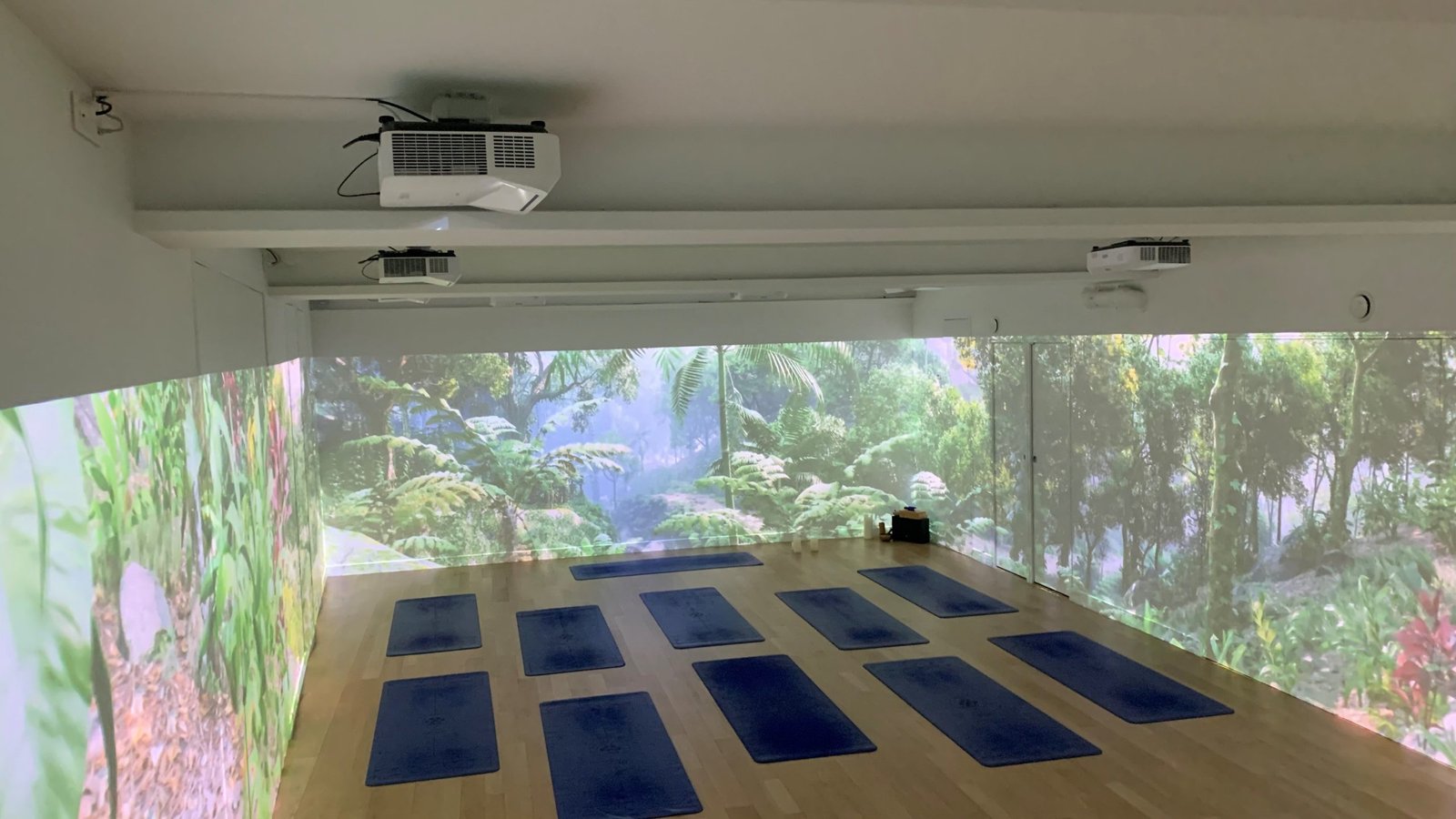
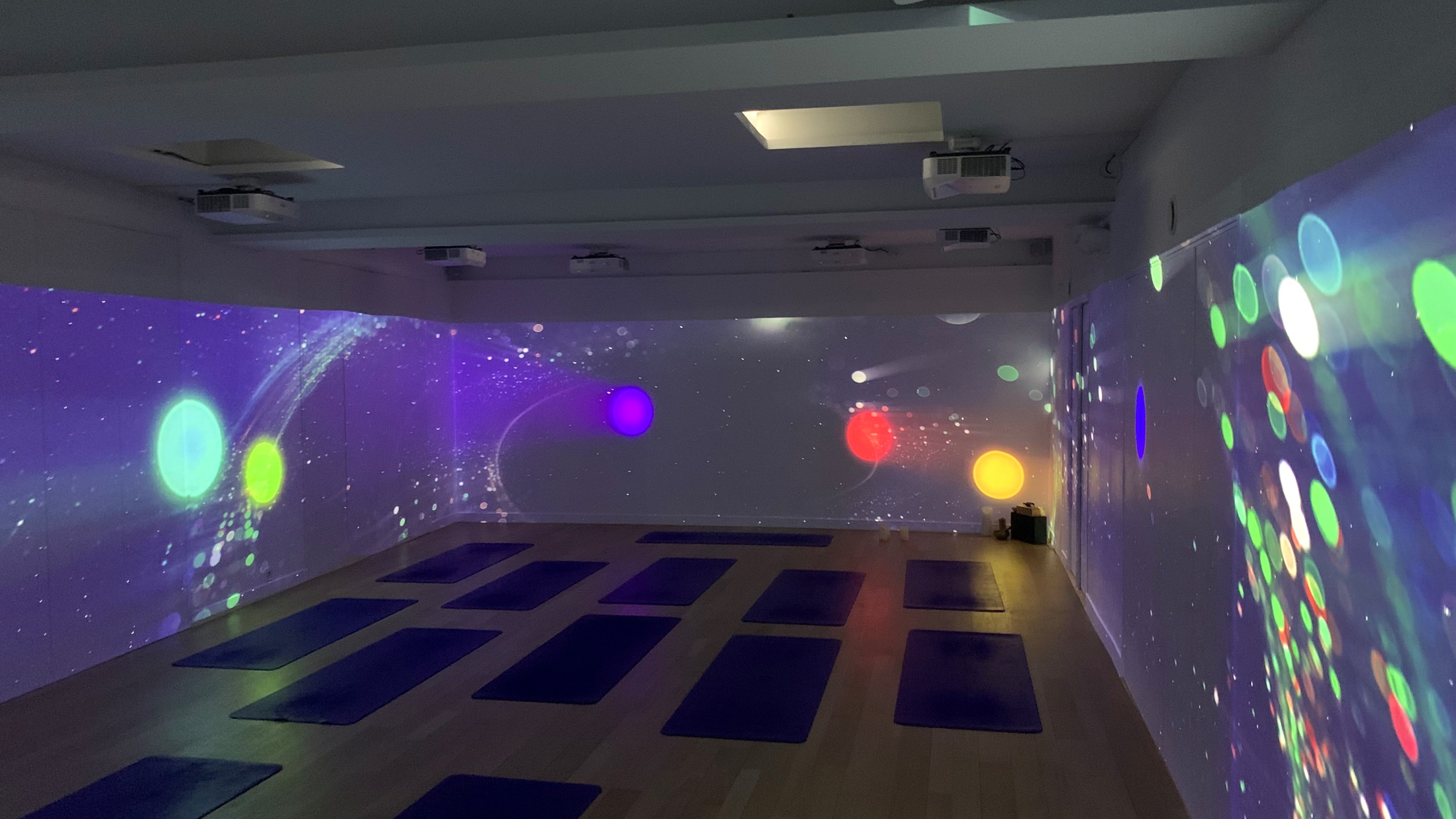
MY Ginger Yoga in Paris wanted to offer something beyond a conventional studio setting. Instead of practising in front of plain walls, participants could be surrounded by changing visual environments selected by the instructor to complement each session.
The challenge was not simply to install more projectors. Six projected images had to be aligned across three walls and presented as one coherent visual space, while keeping daily operation simple enough for instructors to use without technical assistance.
MatrixWorks Europe supported integrator Eurosono in developing the projection system.
The system
The installation combined:
- Six BenQ laser ultra-short-throw projectors
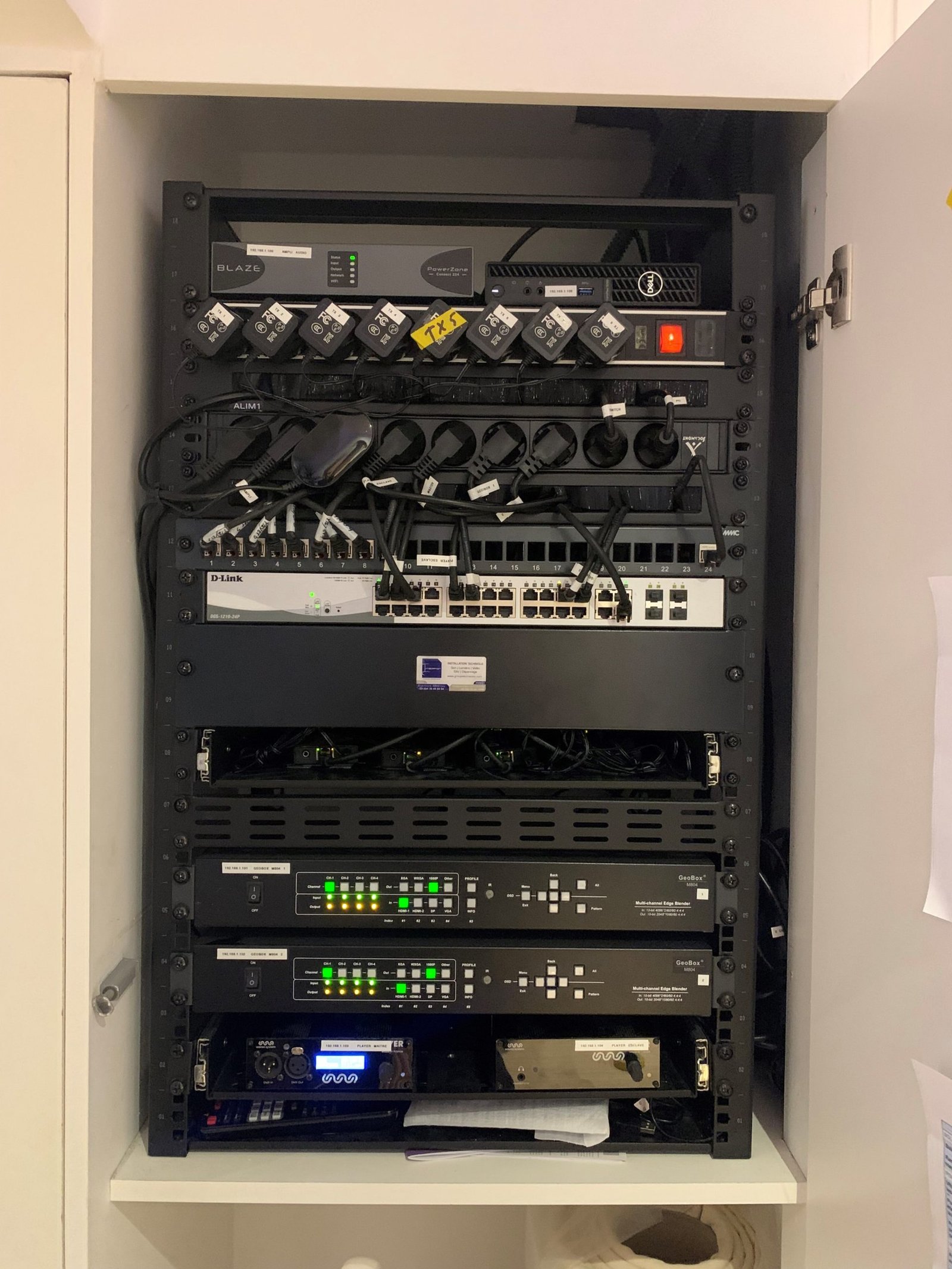
- Two 4K media players
- Two GeoBox M803 three-channel processors
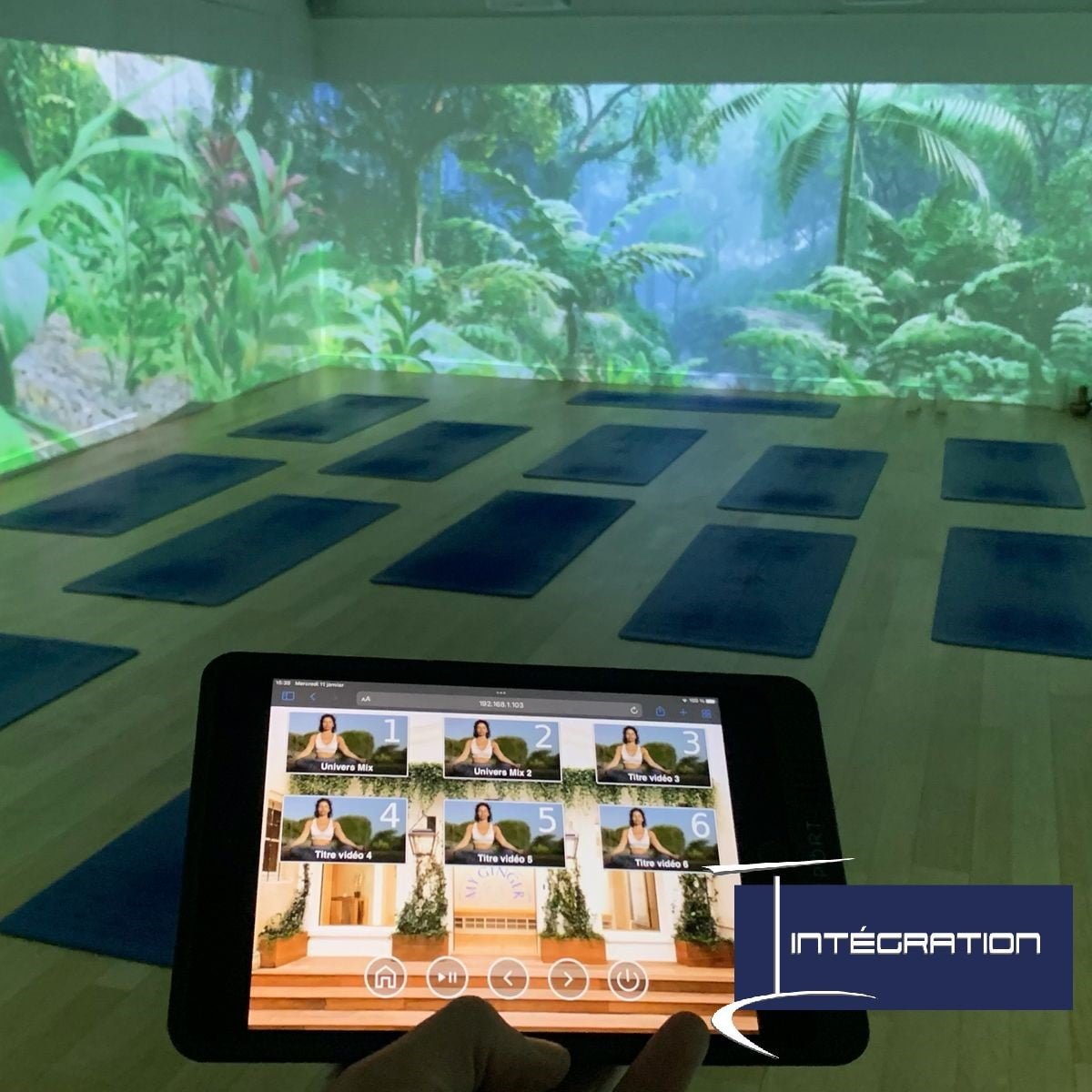
- An iPad-based control interface
- Projection across three walls of the studio
Each M803 provided three independently adjustable output channels. Together, the two processors handled the six projector feeds required for the room.
The M803 was the installed model at the time of the project. It has since been succeeded by the GeoBox M813.
Building one image from six projectors
Content from the two 4K media players was divided and distributed to the appropriate projectors by the GeoBox processors. Each output could then be adjusted independently to match the physical projection area.
The setup followed the normal workflow for a multi-projector immersive room:
- Define the projected canvas
The required image area and overlap between adjacent projectors were established according to the dimensions of the three walls. - Crop and distribute the source images
Each GeoBox output captured the corresponding section of the larger source canvas and sent it to the correct projector. - Align the geometry
Grid patterns were used to position the projected images and correct the geometry at the edges and corners of the room. - Set the overlap regions
The image sections were adjusted so that content remained correctly aligned where two projector images met. - Blend the projected images
Brightness and gamma were fine-tuned across the overlap regions to reduce visible transitions between projectors.
Once commissioned, these geometry, cropping and blending settings remained inside the GeoBox processors.
Separating content playback from display alignment
The media players were responsible for storing and playing the visual content. The GeoBox processors handled the fixed display-side work: distributing the image, correcting the geometry and blending the projector outputs.
This separation was important for everyday reliability. New visual environments did not need to be pre-warped specifically for each projector before playback. The media players could supply the content canvas, while the installed GeoBox configuration adapted it to the room.
A computer could be used during commissioning when convenient, but continuous PC-based warping software was not required during normal operation. The alignment of the room therefore did not depend on an application running correctly every time a class began.
Simple operation for instructors
The instructor could select an immersive environment through the iPad interface without accessing the projector or processor settings.
This kept two very different tasks separate:
- The instructor selected the atmosphere appropriate for the class.
- The installed system maintained the technical alignment of the six projected images.
Together with laser projectors, this created a system designed for repeated daily use with limited routine adjustment.
From projection equipment to part of the experience
In this project, the technology was not intended to become the centre of attention. Its role was to make the projected environment feel continuous enough that participants could focus on the session rather than on six separate projector images.
The result was a three-wall immersive yoga studio in which instructors could move between different visual settings while the underlying projection geometry remained consistent.